By Dr. Gaurav Jangra, Chief Editor, Factsopedia
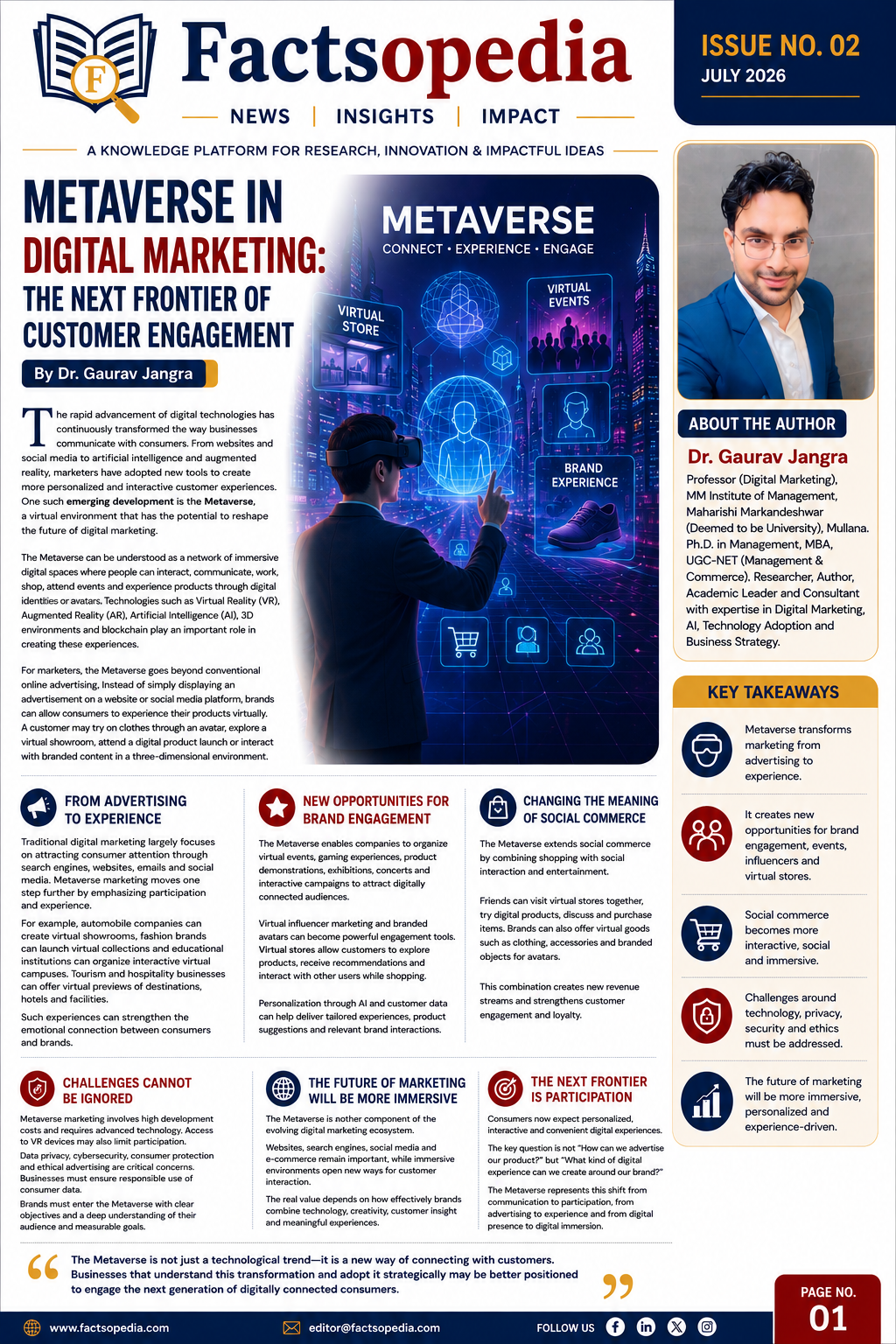
The rapid advancement of digital technologies has continuously transformed the way businesses communicate with consumers. From websites and social media to artificial intelligence and augmented reality, marketers have adopted new tools to create more personalized and interactive customer experiences. One such emerging development is the Metaverse, a virtual environment that has the potential to reshape the customer engagement and future of digital marketing.
The Metaverse can be understood as a network of immersive digital spaces where people can interact, communicate, work, shop, attend events and experience products through digital identities or avatars. Technologies such as Virtual Reality (VR), Augmented Reality (AR), Artificial Intelligence (AI), 3D environments and blockchain play an important role in creating these experiences.
For marketers, the Metaverse goes beyond conventional online advertising. Instead of simply displaying an advertisement on a website or social media platform, brands can allow consumers to experience their products virtually. A customer may try on clothes through an avatar, explore a virtual showroom, attend a digital product launch or interact with branded content in a three-dimensional environment.
From Advertising to Experience
Traditional digital marketing largely focuses on attracting consumer attention through search engines, websites, emails and social media. Metaverse marketing moves one step further by emphasizing participation and experience.
For example, automobile companies can create virtual showrooms where customers explore vehicles without visiting a physical dealership. Fashion brands can introduce virtual clothing collections, while educational institutions can organize interactive virtual campuses, exhibitions and events. Tourism and hospitality businesses can provide virtual previews of destinations, hotels and facilities before customers make a booking decision.
Such experiences can strengthen the emotional connection between consumers and brands. Rather than being passive viewers of advertisements, consumers become active participants in the brand environment.
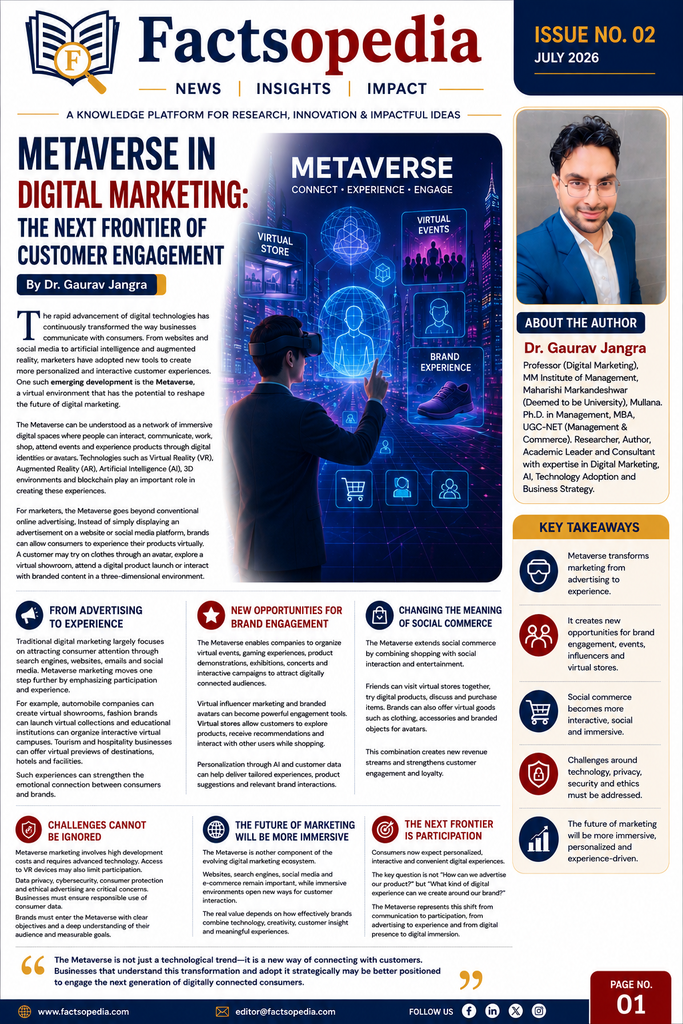
New Opportunities for Brand Engagement
One of the major advantages of the Metaverse is its ability to create highly engaging and memorable interactions. Companies can organize virtual events, gaming experiences, product demonstrations, exhibitions, concerts and interactive campaigns to attract digitally connected audiences.
Metaverse platforms can also provide opportunities for virtual influencer marketing. Brands may collaborate with digital personalities or create their own virtual brand ambassadors. Similarly, virtual stores can allow customers to explore products, receive recommendations and interact with other users while shopping.
Another important opportunity lies in personalization. By combining Metaverse environments with artificial intelligence and customer data, companies can potentially provide personalized product recommendations, advertisements and experiences based on individual interests and behaviour.
Changing the Meaning of Social Commerce
The Metaverse may also extend the concept of social commerce. Today, consumers discover and purchase products through platforms such as social media and e-commerce websites. In immersive digital environments, shopping can become a more social and interactive activity.
Friends may visit a virtual store together, discuss products through their avatars and purchase physical or digital items directly from the environment. This combination of entertainment, social interaction and commerce could create new forms of customer engagement.
Brands may also offer digital goods such as virtual clothing, accessories and branded objects for avatars. These digital products can become part of a consumer’s online identity and provide companies with entirely new sources of revenue.
Challenges Cannot Be Ignored
Despite its possibilities, Metaverse marketing also presents significant challenges. The development of high-quality virtual experiences can require considerable technological expertise and investment. Access to devices such as VR headsets may also limit participation among some consumer groups.
Issues related to data privacy, cybersecurity, consumer protection, digital identity and ethical advertising will become increasingly important. Since immersive environments can collect detailed information about user behaviour and interactions, businesses must ensure responsible use of consumer data.
There is also the risk of brands entering the Metaverse simply because it is fashionable without having a clear marketing objective. Technology alone cannot guarantee customer engagement. Businesses must understand whether their target audience actually values immersive experiences and whether such initiatives contribute to measurable marketing goals.
The Future of Marketing Will Be More Immersive
The Metaverse should not necessarily be viewed as a replacement for existing digital marketing channels. Instead, it can become another component of the evolving digital marketing ecosystem. Websites, search engines, social media, mobile applications and e-commerce will continue to remain important, while immersive environments may offer additional opportunities for customer interaction.
The real value of the Metaverse will depend on how effectively brands combine technology with creativity, customer understanding and meaningful experiences.
As consumers increasingly expect personalized, interactive and convenient digital engagement, marketers will have to move beyond simply asking, “How can we advertise our product?” The more relevant question may soon become, “What kind of digital experience can we create around our brand?”
The Metaverse represents this shift from communication to participation, from advertising to experience and from digital presence to digital immersion. Businesses that understand this transformation and adopt it strategically may be better positioned to engage the next generation of digitally connected consumers.