












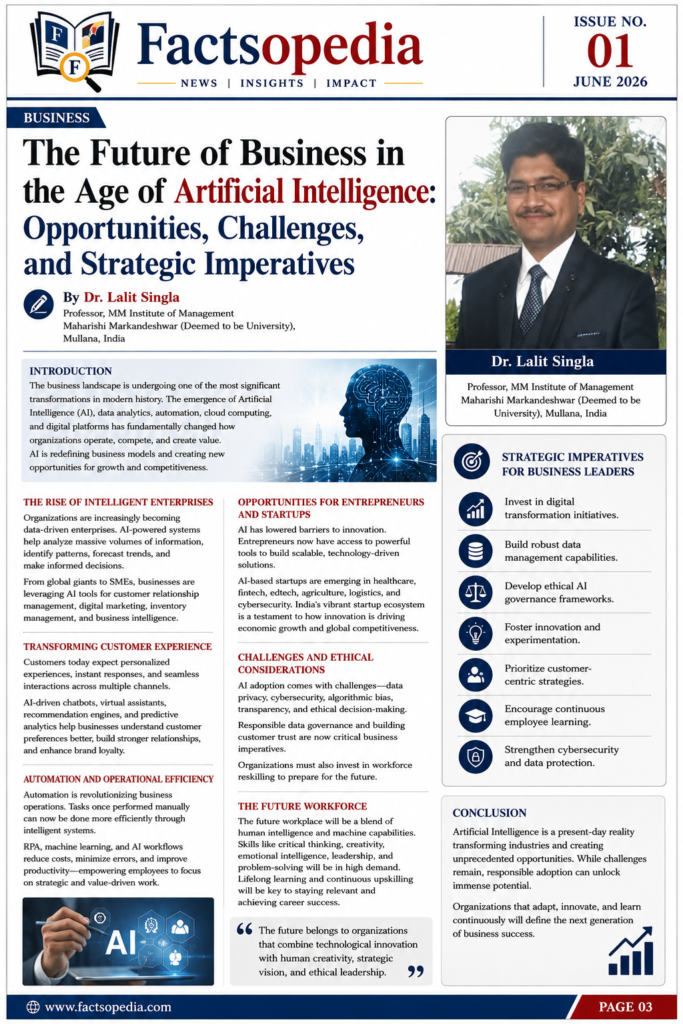
By Dr. Lalit Singla
Professor, MM Institute of Management
Maharishi Markandeshwar (Deemed to be University), Mullana, India
Introduction
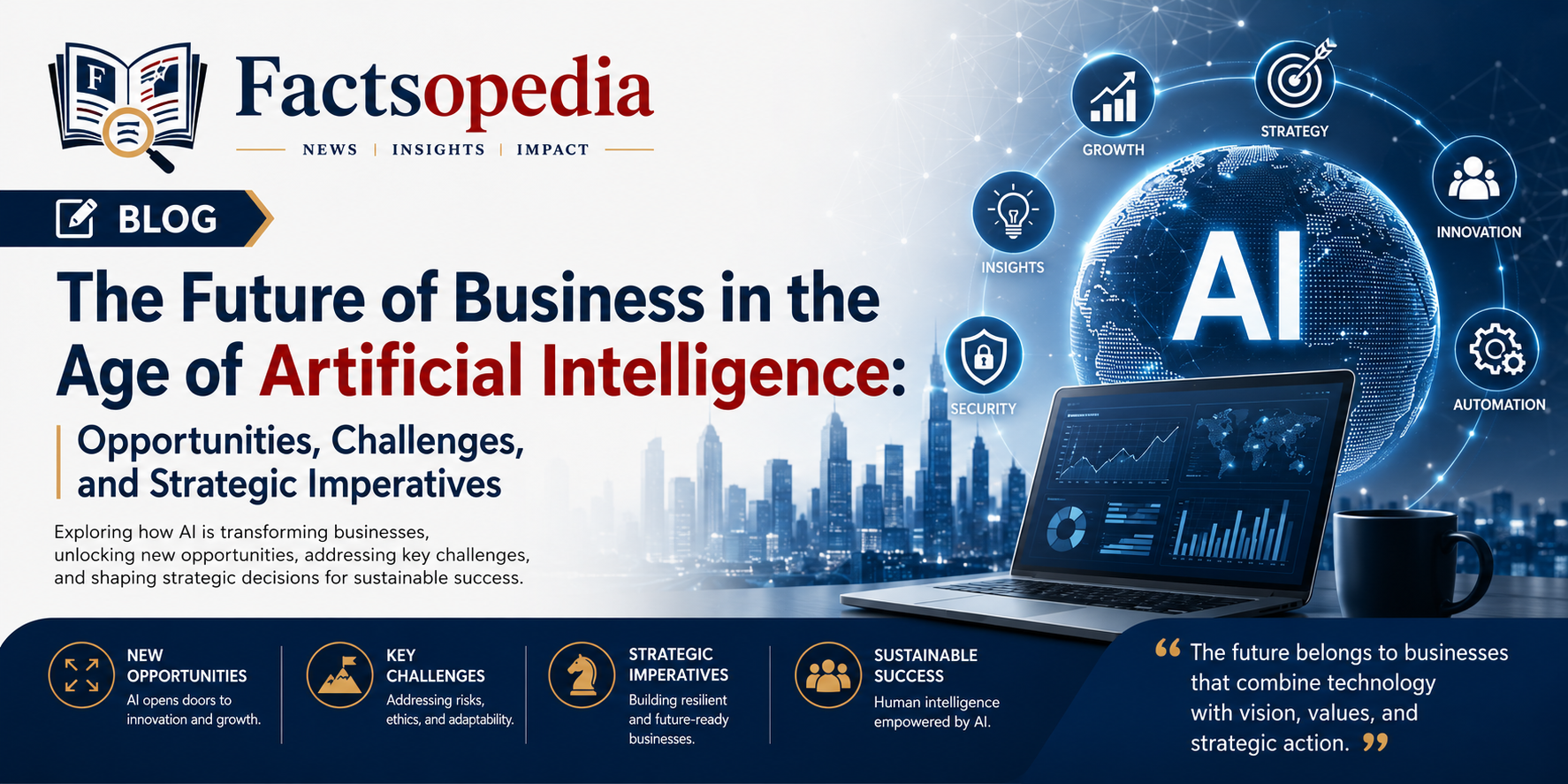
The Future of Business in the Age of Artificial Intelligence (AI): Opportunities, Challenges, and Strategic Imperatives – The business landscape is undergoing one of the most significant transformations in modern history. The emergence of Artificial Intelligence (AI), data analytics, automation, cloud computing, and digital platforms has fundamentally changed how organizations operate, compete, and create value. Businesses that once relied heavily on traditional processes are now embracing intelligent technologies to improve efficiency, enhance customer experiences, and drive innovation.
Artificial Intelligence, in particular, has become a strategic force shaping the future of organizations across industries. From manufacturing and healthcare to finance, retail, and education, AI is redefining business models and creating new opportunities for growth and competitiveness.
The Rise of Intelligent Enterprises
Today’s organizations are increasingly becoming data-driven enterprises. Business decisions are no longer based solely on intuition and experience; instead, they are supported by real-time data and predictive analytics. AI-powered systems help organizations analyze massive volumes of information, identify patterns, forecast trends, and make informed decisions.
Companies such as Amazon, Google, Microsoft, and Tesla have demonstrated how AI can create competitive advantages through personalization, automation, and innovation. Even small and medium enterprises (SMEs) are leveraging AI-enabled tools for customer relationship management, digital marketing, inventory management, and business intelligence.
Transforming Customer Experience
Customer expectations have evolved dramatically in the digital era. Consumers now expect personalized experiences, instant responses, and seamless interactions across multiple channels.
AI-driven chatbots, virtual assistants, recommendation engines, and predictive analytics enable businesses to understand customer preferences more accurately. Streaming platforms recommend content based on viewing history, e-commerce websites suggest products aligned with customer interests, and banks use AI to provide personalized financial services.
Organizations that effectively utilize customer data can build stronger relationships, increase customer satisfaction, and enhance brand loyalty.
Automation and Operational Efficiency
Automation is revolutionizing business operations. Routine and repetitive tasks that previously required substantial human effort can now be performed more efficiently through intelligent systems.
Robotic Process Automation (RPA), machine learning algorithms, and AI-powered workflows are helping organizations reduce operational costs, minimize errors, and improve productivity. Employees are increasingly being freed from repetitive activities, allowing them to focus on strategic, creative, and value-generating tasks.
This shift is not about replacing human talent but enhancing human capabilities through technology.
Opportunities for Entrepreneurs and Startups
Artificial Intelligence has significantly lowered barriers to innovation. Entrepreneurs today have access to powerful digital tools that were previously available only to large corporations.
AI-based startups are emerging in diverse sectors, including healthcare diagnostics, financial technology, education technology, agriculture, logistics, and cybersecurity. Entrepreneurs can leverage AI to develop innovative products, improve decision-making, and create scalable business models.
India’s growing startup ecosystem provides an excellent example of how technology-driven entrepreneurship is contributing to economic growth, employment generation, and global competitiveness.
Challenges and Ethical Considerations
Despite its enormous potential, AI adoption presents several challenges. Organizations must address issues related to data privacy, cybersecurity, algorithmic bias, transparency, and ethical decision-making.
As businesses collect and process increasing amounts of customer data, maintaining trust becomes critical. Consumers are becoming more aware of how their information is used, making responsible data governance an essential business priority.
Additionally, workforce transformation requires organizations to invest in employee training and skill development. Future success will depend not only on technological adoption but also on preparing human resources for evolving business environments.
The Future Workforce
The future workplace will be characterized by collaboration between humans and intelligent machines. Skills such as critical thinking, creativity, emotional intelligence, leadership, and problem-solving will become increasingly valuable.
Educational institutions and organizations must work together to develop talent capable of thriving in technology-driven environments. Lifelong learning and continuous upskilling will become essential for professionals seeking long-term career success.
Business leaders must cultivate a culture of innovation, adaptability, and learning to remain competitive in rapidly changing markets.
Strategic Imperatives for Business Leaders
To succeed in the AI-driven economy, organizations should focus on several strategic priorities:
- Invest in digital transformation initiatives.
- Build robust data management capabilities.
- Develop ethical AI governance frameworks.
- Foster innovation and experimentation.
- Prioritize customer-centric strategies.
- Encourage continuous employee learning and development.
- Strengthen cybersecurity and data protection measures.
Organizations that embrace these priorities will be better positioned to capitalize on emerging opportunities while effectively managing risks.
Conclusion
Artificial Intelligence is no longer a futuristic concept; it is a present-day business reality. The integration of intelligent technologies is transforming industries, reshaping competitive dynamics, and creating unprecedented opportunities for growth and innovation.
While challenges related to ethics, privacy, and workforce adaptation remain significant, the potential benefits far outweigh the risks when technology is implemented responsibly. The future belongs to organizations that can successfully combine technological innovation with human creativity, strategic vision, and ethical leadership.
As businesses navigate this transformative era, one thing is certain: the organizations that adapt, innovate, and learn continuously will define the next generation of economic success.
Factsopedia – News | Insights | Impact







: Opportunities, Challenges, and Strategic Imperatives - The business landscape is undergoing one of the most significant transformations in modern history.)