By Dr. Rajni Sharma
Social Worker, Yamunanagar
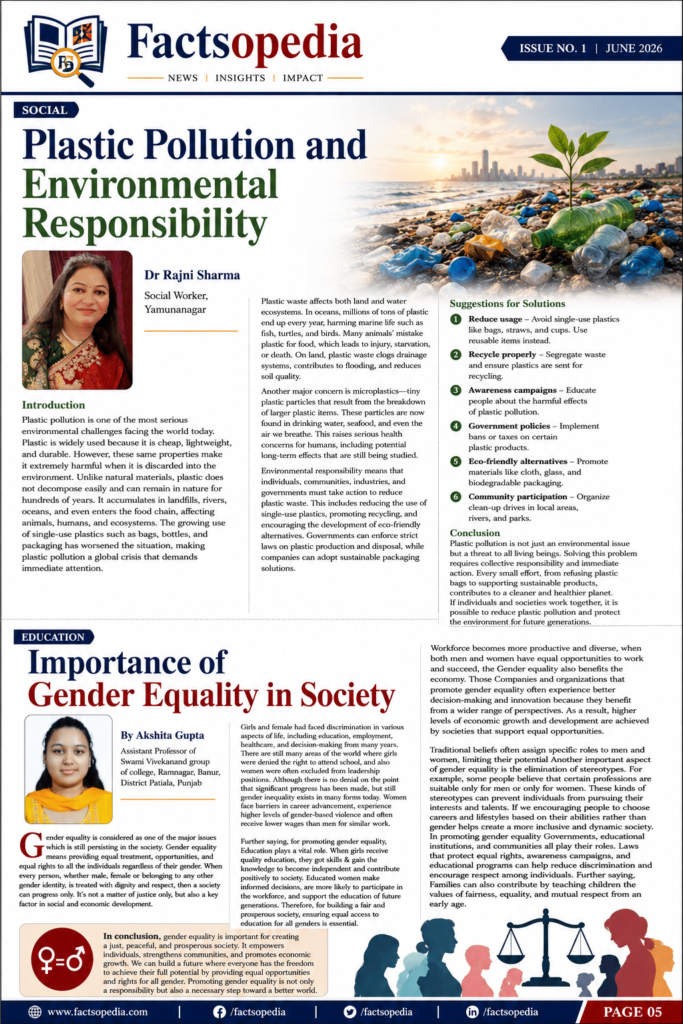
Plastic pollution has emerged as one of the most pressing environmental challenges of the twenty-first century. From bustling cities to remote villages, from rivers and oceans to forests and agricultural lands, plastic waste has become an unavoidable part of our surroundings. While plastic has revolutionized modern life due to its affordability, durability, and versatility, its excessive and irresponsible use has created a global environmental crisis.
Unlike organic materials that decompose naturally, plastic can persist in the environment for hundreds of years. As a result, enormous quantities of plastic waste accumulate in landfills, waterways, and natural ecosystems, posing serious threats to wildlife, human health, and environmental sustainability.
Understanding the Plastic Pollution Crisis
The widespread use of single-use plastic products such as shopping bags, bottles, straws, food packaging, and disposable containers has significantly increased plastic waste generation worldwide. According to environmental studies, millions of tons of plastic enter oceans and water bodies every year, creating long-term ecological damage.
Plastic pollution is no longer merely an environmental issue; it has become a social, economic, and public health concern that affects every individual on the planet.
Impact on Ecosystems and Wildlife
One of the most visible consequences of plastic pollution is its devastating impact on wildlife. Marine animals such as turtles, dolphins, whales, fish, and seabirds often mistake plastic debris for food. Consuming plastic can lead to internal injuries, starvation, suffocation, and death.
On land, animals frequently become entangled in discarded plastic waste, causing severe injuries and restricting movement. Plastic waste also disrupts natural habitats and threatens biodiversity.
Furthermore, plastic pollution contaminates rivers, lakes, and oceans, reducing water quality and affecting aquatic ecosystems that support countless species.
The Growing Threat of Microplastics
As larger plastic items break down over time, they form tiny particles known as microplastics. These microscopic fragments are increasingly being detected in drinking water, food products, soil, and even the air we breathe.
Scientists have found microplastics in seafood, bottled water, and various agricultural products, raising concerns about potential health risks for humans. Although research is ongoing, experts warn that long-term exposure to microplastics may have adverse effects on human health and well-being.
Environmental Responsibility: Everyone’s Duty
Addressing plastic pollution requires collective responsibility. Governments, industries, educational institutions, communities, and individuals all have important roles to play in reducing plastic waste and promoting sustainable practices.
Environmental responsibility means making conscious choices that minimize environmental harm while protecting natural resources for future generations.
Small actions taken consistently by millions of people can create significant positive impacts on the environment.
Practical Solutions to Reduce Plastic Pollution
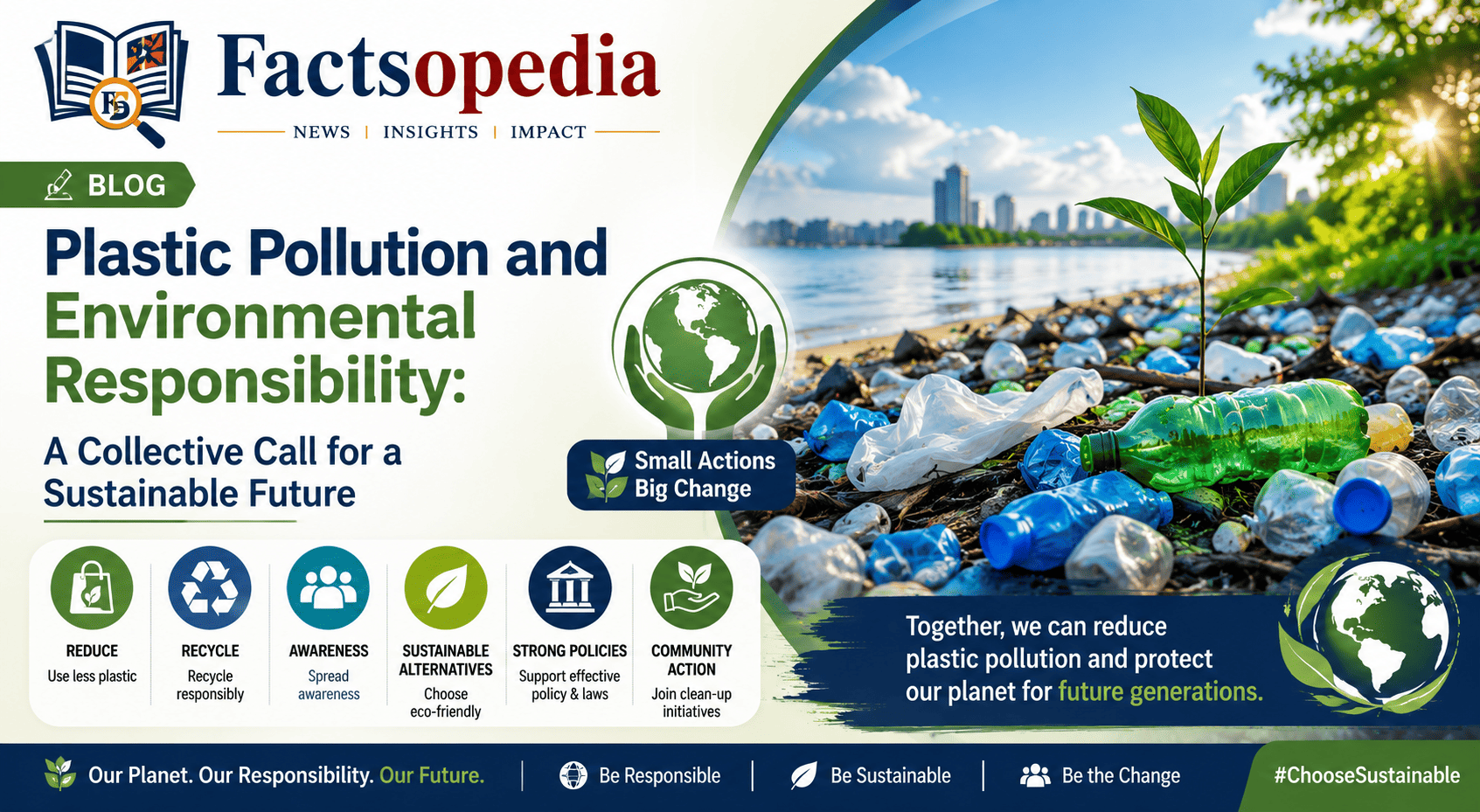
Reduce Single-Use Plastics
The most effective way to tackle plastic pollution is to reduce consumption. Individuals can replace disposable plastic items with reusable alternatives such as cloth bags, stainless steel bottles, reusable containers, and eco-friendly utensils.
Promote Recycling
Proper waste segregation and recycling can significantly reduce the amount of plastic entering landfills and natural ecosystems. Communities should be encouraged to adopt efficient recycling practices and infrastructure.
Increase Public Awareness
Environmental education and awareness campaigns play a crucial role in changing public behavior. Schools, colleges, organizations, and community groups should actively promote awareness about the harmful effects of plastic pollution.
Encourage Sustainable Alternatives
Businesses and manufacturers should invest in biodegradable, compostable, and environmentally friendly packaging materials. Innovation in sustainable product design can reduce dependence on conventional plastics.
Strengthen Government Policies
Governments can implement regulations, restrictions, and taxes on single-use plastics while encouraging sustainable manufacturing and waste management practices.
Community Participation
Local clean-up drives, environmental campaigns, and citizen-led initiatives can make a substantial difference in maintaining cleaner public spaces and protecting natural habitats.
The Role of Youth in Environmental Protection
Young people have become powerful advocates for environmental sustainability across the world. Through awareness campaigns, innovation, responsible consumption, and community engagement, youth can contribute significantly to reducing plastic pollution.
Educational institutions should encourage students to participate in environmental projects and sustainability initiatives that foster responsible citizenship.
Building a Sustainable Future
Environmental sustainability cannot be achieved without addressing the issue of plastic pollution. Every plastic bag refused, every reusable bottle carried, and every piece of waste recycled contributes to a healthier environment.
Creating a sustainable future requires a shift from convenience-driven consumption to environmentally conscious living. By adopting responsible habits and supporting sustainable practices, society can reduce its ecological footprint and preserve natural resources for future generations.
Conclusion
Plastic pollution represents one of the greatest environmental challenges of our time, but it is also a problem that can be solved through collective action and responsible behavior. Governments, industries, communities, and individuals must work together to reduce plastic waste, promote sustainable alternatives, and protect ecosystems.
Environmental responsibility begins with everyday choices. By embracing sustainable lifestyles and encouraging others to do the same, we can build a cleaner, greener, and healthier world for generations to come.
Factsopedia – News | Insights | Impact